Rolled Oats
Grains
Ingredient Library
Browse a structured catalogue of ingredients organised by food group category. Use the filters to explore specific groups and discover new options for your weekly rotation.
Category Overview
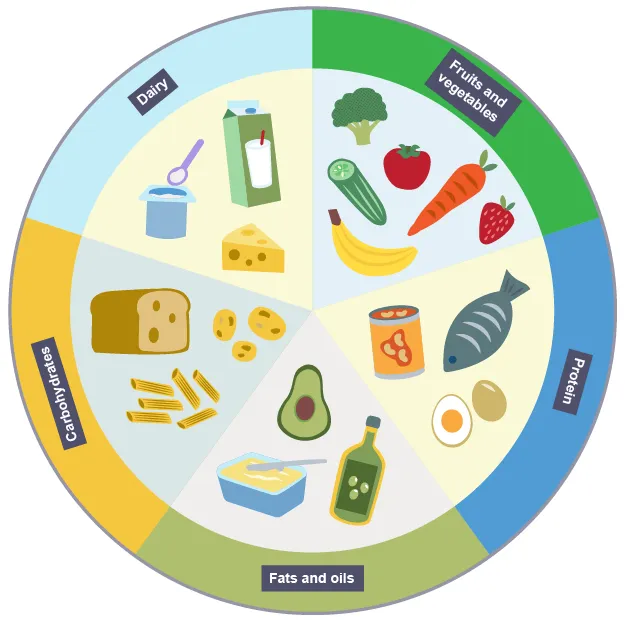
Every ingredient on this platform is mapped to one of six core food group categories. Understanding which group an ingredient belongs to makes it straightforward to assess your weekly coverage and plan targeted swaps.
Oats, rice, rye, quinoa, barley, buckwheat, millet, spelt.
Lentils, chickpeas, tofu, eggs, fish, poultry, red and white meats.
All fresh, frozen, and dried vegetable types across colour groups.
Browse Ingredients
Select a category to view relevant ingredients and explore options you may not regularly include in your rotation.
Rolled Oats
Grains
Brown Rice
Grains
Quinoa
Grains
Pearl Barley
Grains
Buckwheat
Grains
Rye Bread
Grains
Red Lentils
Proteins
Chickpeas
Proteins
Firm Tofu
Proteins
Atlantic Salmon
Proteins
Free-Range Eggs
Proteins
Black Beans
Proteins
Spinach
Vegetables
Broccoli
Vegetables
Sweet Potato
Vegetables
Kale
Vegetables
Blueberries
Fruits
Mango
Fruits
Pomegranate
Fruits
Greek Yoghurt
Dairy & Alternatives
Kefir
Dairy & Alternatives
Oat Milk
Dairy & Alternatives
Avocado
Fats & Oils
Extra Virgin Olive Oil
Fats & Oils
Walnuts
Fats & Oils
Chia Seeds
Fats & Oils
Preparation Methods
The preparation method applied to an ingredient significantly changes its characteristics. Diversifying preparation adds another dimension to your variety practice.
Concentrates flavours and changes textures significantly. Particularly effective for root vegetables, brassicas, and legumes. Roasted versions of the same ingredient offer a distinct eating experience to their raw counterpart.
Preserves the structural integrity and natural taste of vegetables and proteins. Light steaming is a versatile method that works across nearly all vegetable categories and lean protein sources.
Fermentation transforms ingredients into distinct products — yoghurt, sauerkraut, tempeh, and kimchi. Including fermented versions of staple ingredients introduces an additional category of dietary variety.
Ingredient Pairing
Pairing ingredients from complementary food groups creates meals that cover more categories per serving — a practical strategy for efficient variety.
Combining a grain base — rice, quinoa, or barley — with a legume source such as lentils or chickpeas creates a meal that covers two core categories within a single preparation.
Pairing a lean protein with a variety of leafy and non-leafy green vegetables builds both category coverage and colour diversity into a single meal format.
Breakfast formats that combine a grain base with seasonal fruit and a dairy or cultured alternative cover three categories simultaneously with minimal preparation complexity.